Embracing Innovation in the Age of AI: Prioritising Process Over Perfection

Updated: Apr 10
Before embarking on this course, my understanding of innovation was narrow; I equated it with the creation of extraordinary products or groundbreaking ideas. However, my perspective has transformed significantly through our insightful readings and engaging discussions. I’ve come to realise that innovation isn’t merely a flashy moment or an exceptional result; it’s a dynamic, ongoing process that extends beyond tangible outputs and novelty.
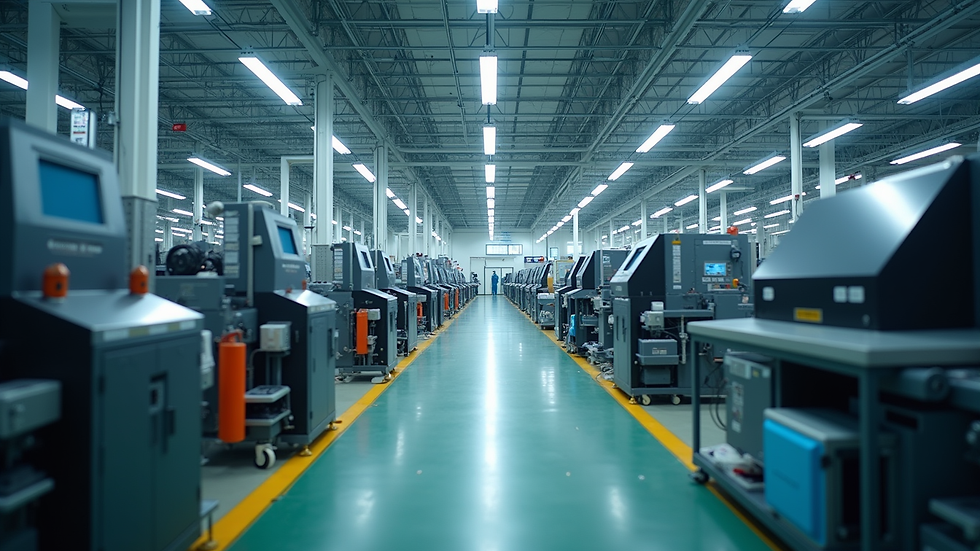
At its core, innovation isn’t confined to a particular department, job title, or even a single concept. It thrives in our approach to tackling challenges, generating creative solutions, and embracing a mindset of continuous improvement. This idea was powerfully illustrated in the Deloitte innovation study, which defines innovation succinctly as new and improved. Though this definition may appear simple, it encapsulates a fundamental truth: innovation is a purposeful endeavour aimed at fostering effective systems.
This insight led me to recognise that optimisation is indeed a vital form of innovation. Minor, incremental improvements, whether in processes, systems, or tools, can accumulate and yield remarkable results over time. Viewing innovation through this lens emphasises that it isn’t solely about dramatic breakthroughs; it’s about the consistent refining of ideas and practices, a perspective I find deeply aligned with my studies in Industrial Engineering.
Moreover, this refreshed perspective aligns seamlessly with how successful organisations operate. Rather than waiting for a “big idea” to materialise, these companies continually adapt, experiment, and seek improvements. Innovation becomes a part of everyday operations rather than an isolated concept. This approach reinforces the belief that innovation is boundless; it can manifest anywhere, anytime, and at any scale.
Simultaneously, this course has introduced me to the evolving role of artificial intelligence (AI) in the innovation landscape. Often heralded as the future of innovation, I’ve come to view AI in a new light: as an incredibly powerful tool, yet still just that, a tool.
On one hand, AI significantly boosts productivity by automating repetitive tasks, generating ideas swiftly, and processing vast amounts of information. It enhances the quality and efficiency of output, empowering individuals and organisations to achieve more with less effort. In this sense, AI becomes an invaluable asset in our modern pursuit of innovation.
However, we must also be mindful of its potential drawbacks. If we become too reliant on AI, there’s a risk that it could stifle human creativity. When individuals start to accept AI-generated responses or ideas without scrutiny, they may inadvertently stop thinking critically or exploring alternative possibilities. While efficiency may increase, the danger lies in potentially losing originality and the unique spark of human innovation.
Understanding this tension is essential. While AI can amplify productivity, it cannot replace the key human elements of innovation: creativity, judgment, and curiosity. Genuine innovation thrives on asking the right questions, challenging long-held assumptions, and thinking outside the box, areas where AI alone falls short.
Consequently, while AI can certainly bolster the innovation process, it does not encompass the entire process. Innovation is a vast realm that embraces a mindset of experimentation and lifelong learning. AI may hasten certain aspects, but it does not encapsulate the full essence of innovation.
Our readings have reinforced the idea that experimentation is a cornerstone of innovation. Whether we’re honing our AI skills or developing new technologies, the most effective strategy involves testing our ideas, learning from setbacks, and iterating over time. Even in high-ambition environments, like Google’s “moonshot factory”, the focus remains on process, testing assumptions, identifying weaknesses promptly, and rapidly refining solutions.
What resonates with me is that innovation, irrespective of its scale, adheres to a set of core principles:
It begins with a problem.
It necessitates experimentation.
It thrives on learning from failure.
It depends on a commitment to continuous improvement.
In this process, AI serves as a supportive force rather than a substitute. It can help generate ideas, analyse data, and enhance efficiency, but the vision, direction, and creative spark must come from people.
Looking ahead, the most crucial skill won’t just be understanding how to use AI, but also knowing how to think collaboratively with it without succumbing to dependency. This entails leveraging AI to boost productivity while still nurturing our independent thought and creativity.
As I envision my future career, I am committed to fostering innovation with this balanced, thoughtful mindset. I aspire to see innovation as a fluid and adaptable journey rather than a fixed endpoint.
Ultimately, this course has illuminated for me that innovation should not be about striving for perfection or passively waiting for transformative ideas to emerge. Instead, it’s about immersing ourselves in a continuous cycle of improvement, experimentation, and learning. AI can certainly facilitate and accelerate this journey, but it’s merely one component in a much larger tapestry. True innovation belongs not to technology alone, but to those of us who choose to engage with it thoughtfully, creatively, and purposefully.

Comments